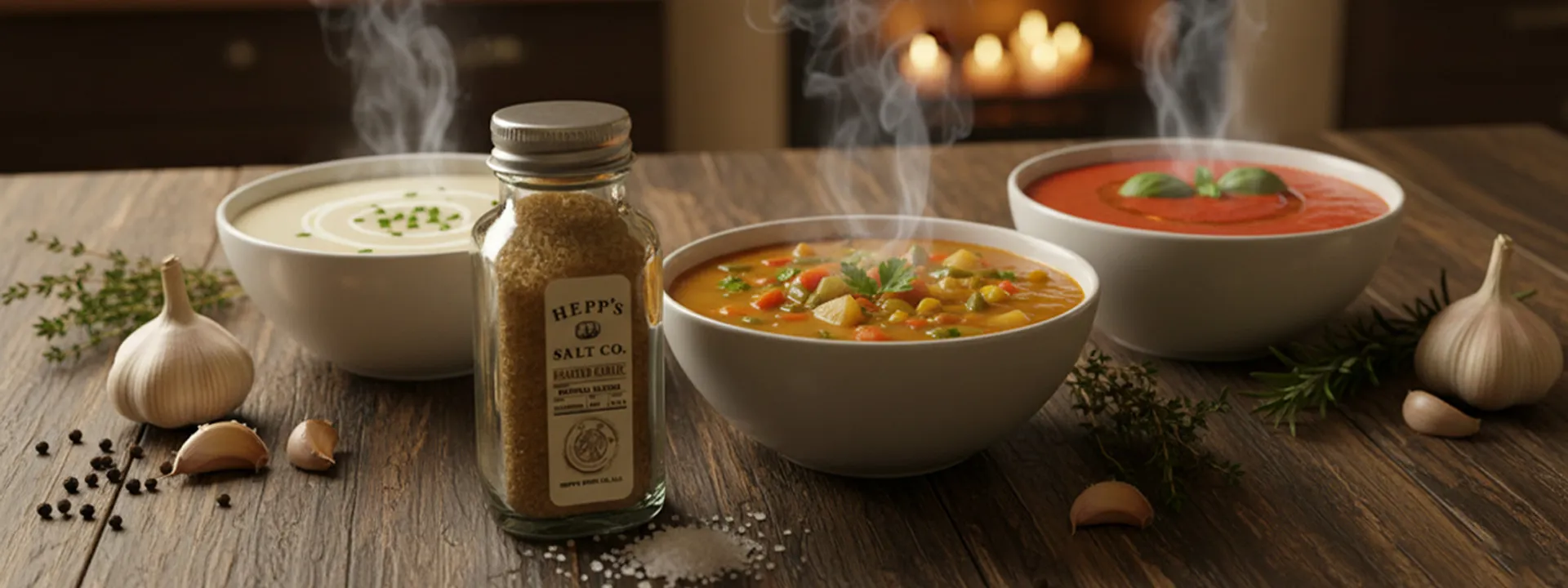
The first genuinely cold night in Brooklyn hit last week that wet, windy 38-degree kind where your face goes numb on the walk from the subway. I got home, peeled off three layers, and went straight for the soup pot.
Soup season sneaks up. One day you’re grilling, the next you’re standing over steam wondering why you waited so long. These three recipes have gotten me through more November weeks than I can count. They’re forgiving when you forget them on the stove, they get better the next day, and most importantly they don’t require roasting garlic for an hour.
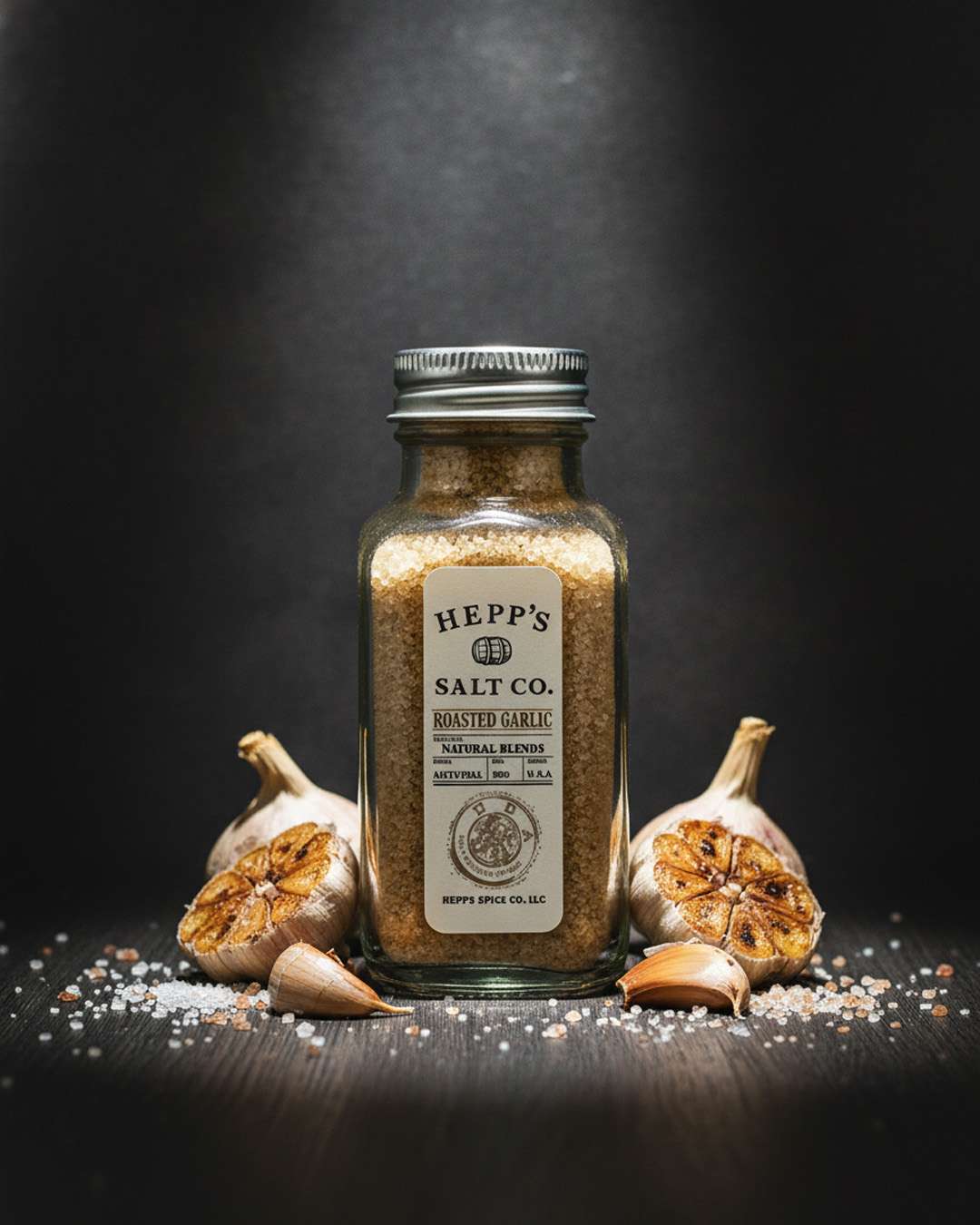
That last part matters. I love the sweet, mellow flavor of roasted garlic, but I’m not waiting around when I’m hungry. HEPP’s Roasted Garlic Sea Salt solves this entirely. It brings that caramelized garlic depth without the prep.
Why Soup Works When It's Cold:
Economics, mostly. A rotisserie chicken becomes three meals if you’re paying attention. They freeze beautifully make a double batch and ignore dinner decisions for a week. And when everyone around you starts sniffling (because November always brings that), you’ve got something ready that actually helps.
The difference between soup you want and soup you endure comes down to when you season. Most people wait until the end, then wonder why it tastes flat. Salt needs time to work its way through everything as it cooks. Layer it in, taste as you go, and you’ll end up with something that doesn’t need rescuing with hot sauce later.
Using roasted garlic sea salt instead of plain salt means you’re adding flavor, not just saltiness. The roasted notes come through in every spoonful without announcing themselves. It’s subtle but noticeable the kind of detail that makes people tilt their head and ask what you did differently.
Recipe 1: Roasted Garlic Tomato Soup:
Not the canned stuff. Deeper, richer, pairs perfectly with grilled cheese dunked until it drips.
You’ll Need:
- 3 pounds ripe tomatoes (or two 28-oz cans whole tomatoes)
- 1 large onion, roughly chopped
- 4 tablespoons olive oil
- 3 cups vegetable or chicken stock
- 1 cup heavy cream
- Fresh basil leaves (about 1 cup, packed)
- 1½ tablespoons HEPP’s Roasted Garlic Sea Salt
- ½ teaspoon black pepper
- 1 teaspoon sugar (if your tomatoes are acidic)
How to Make It:
Heat two tablespoons of olive oil in your Dutch oven over medium heat. Add the onions and cook slowly eight minutes or so. Don’t rush this. Properly cooked onions balance the tomato acidity later and make the difference between thin soup and something with actual body.
Core and halve fresh tomatoes if using. Canned ones go straight in. Add them to the pot with stock and one tablespoon of the roasted garlic salt. Season early. It matters.
Bring to a gentle boil, then drop to a simmer for 25 minutes. The tomatoes break down and everything unifies.
Take the pot off heat and add basil leaves and remaining olive oil. Blend until smooth. I use an immersion blender for this less cleanup. Watch yourself with hot liquid.
Stir in the cream and taste. Add remaining salt and black pepper as needed. The soup looks thin at first but thickens slightly as it cools.
The Garlic Factor:
Tomatoes and garlic belong together, but raw garlic is too sharp and roasting it from scratch adds an hour. The roasted garlic sea salt gives you that sweet, caramelized flavor instantly. It’s the reason this tastes like you spent more time on it than you did.
Recipe 2: Creamy White Bean Soup with Winter Vegetables:

I make this when I want comfort without falling asleep by 8 PM. Hearty, but it doesn’t sit heavy.
Ingredients:
- 2 tablespoons butter
- 2 tablespoons olive oil
- 2 medium carrots, diced
- 2 celery stalks, diced
- 1 medium onion, diced
- 2 cups diced potatoes
- 6 cups chicken or vegetable stock
- 2 cans (15 oz each) white beans, drained
- 2 cups chopped kale or spinach
- 1½ tablespoons HEPP’s Roasted Garlic Sea Salt
- 1 teaspoon dried thyme
- ½ cup heavy cream or half-and-half
- Fresh parsley for garnish
The Process:
Melt butter with olive oil in a large pot over medium heat. Butter alone burns too easily, oil alone lacks flavor. Together they work. Add carrots, celery, and onion. Cook for about ten minutes until the onions turn translucent.
Add one tablespoon of roasted garlic salt and the thyme. Stir into the vegetables before adding liquid this blooms the flavors properly.
Throw in potatoes and stock. Bring to a boil, simmer for fifteen minutes until the potatoes are tender. Add white beans, simmer another ten.
Here’s a move I learned working brunch: scoop out two cups of the soup and blend until smooth. Pour it back in. This creates a creamy texture without loading up on dairy. Makes it look like you’ve been stirring for hours.
Stir in greens they wilt fast. Add cream and remaining salt. Taste and adjust.
The soup thickens as it sits. If you’re reheating tomorrow, it’ll be closer to stew. Add a splash of stock to loosen it back up.
Why It Works:
The roasted garlic salt enhances the earthiness of white beans without overwhelming the vegetables. You get a warming garlic essence that stays subtle enough to let everything else shine.
Recipe 3: Chicken and Wild Rice Soup:
Complete meal. No sides needed. This is what gets made when it’s properly cold and you need something substantial.
Grab:
- 2 tablespoons butter
- 1 medium onion, diced
- 3 carrots, diced
- 3 celery stalks, diced
- 8 ounces mushrooms, sliced
- ⅔ cup wild rice blend
- 6 cups chicken stock
- 3 cups cooked, shredded chicken
- 1 cup half-and-half
- 2 tablespoons flour (optional, for thickness)
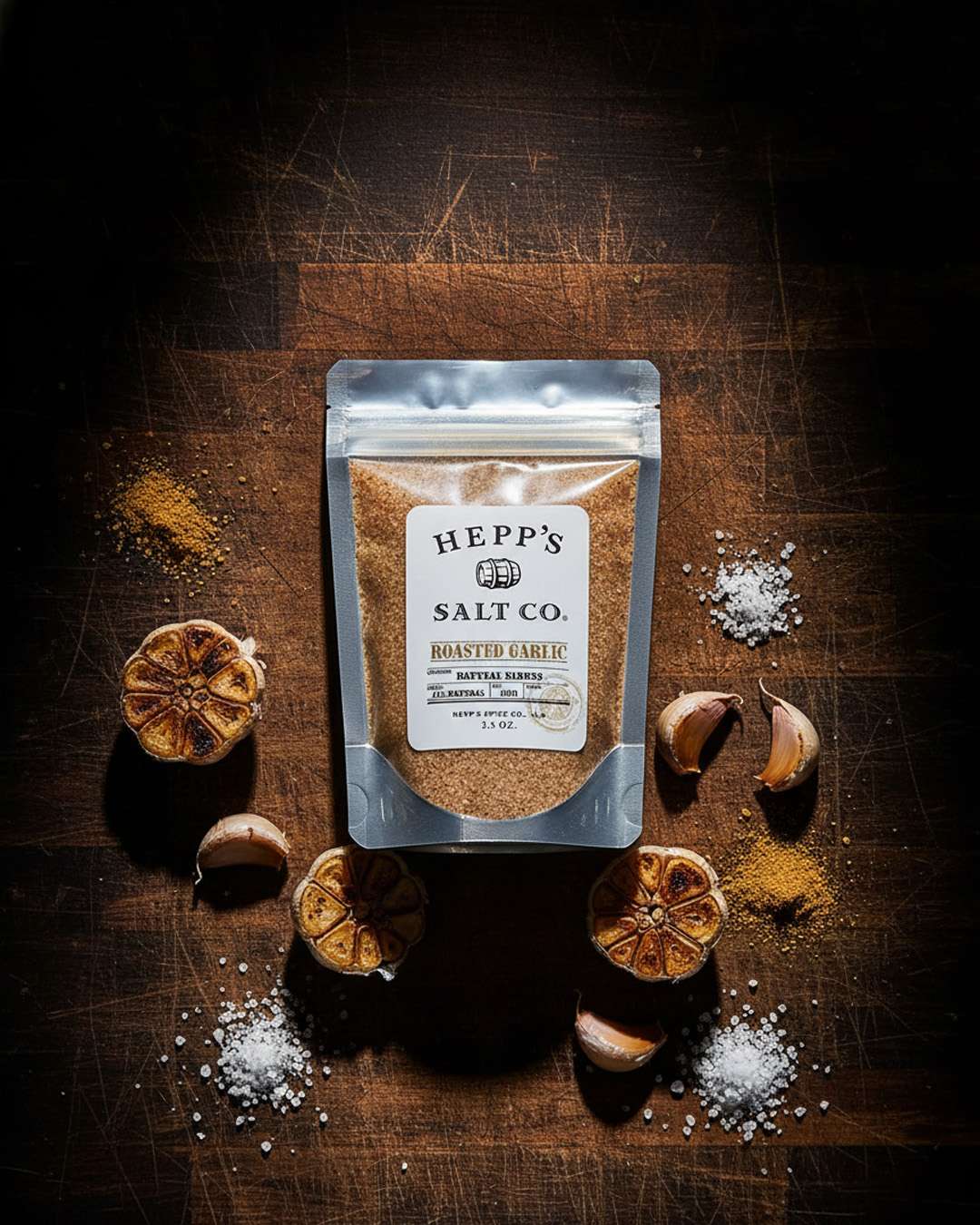
- 2 tablespoons HEPP’s Roasted Garlic Sea Salt
- 1 teaspoon dried sage
- ½ teaspoon black pepper
- Fresh thyme for garnish
Instructions:
Melt butter, add onions, carrots, and celery. Cook until softened eight minutes. Add mushrooms and let them cook until they release moisture and start browning. This takes patience. Mushrooms add serious depth when you cook them properly, but they need time.
If using flour for thickness, sprinkle it in now and stir for about a minute. Add one tablespoon roasted garlic salt, sage, and pepper.
Pour in stock, scraping up browned bits from the pot bottom. That’s flavor you don’t waste. Add wild rice. Check your package for cooking time, but figure on 40-45 minutes of simmering.
Once rice is tender, add shredded chicken and half-and-half. Warm through, then taste and add remaining salt.
About The Chicken:
Rotisserie chicken saves an hour. Pull the meat, shred it, done. If you’re feeling ambitious, simmer the carcass for homemade stock. I’ve done it twice. It’s better, but it’s also two extra hours on a weeknight.
I once tried finely chopping the mushrooms thinking it would save time. It didn’t and the texture was wrong. Just slice them normally.
How Roasted Garlic Salt Changes Soup:
When garlic roasts, sharp compounds mellow while natural sugars caramelize. You end up with a sweet, nutty flavor instead of raw garlic bite. Regular garlic powder tastes flat sometimes slightly bitter in comparison.
Sea salt brings more complexity than table salt. Trace minerals add subtle depth. Combine quality sea salt with properly roasted garlic and you’ve got seasoning that does the work of two ingredients.
In these soups, HEPP’s Roasted Garlic Sea Salt seasons and adds aromatics. It creates the kind of depth that normally requires dirtying extra pans.

Making These Work With Your Schedule:
All three improve after a day in the fridge as flavors develop. Perfect for Sunday meal prep.
Wait until the soup cools completely before portioning into storage containers. Most freeze beautifully for three months. Creamy soups can separate when frozen but usually come back together with stirring after reheating.
When reheating, add a splash of stock if things have thickened too much. Grains and starches keep absorbing liquid as they sit. I consistently forget this and end up with something closer to stew, but a quick splash fixes it.
Getting It Right: Practical Notes:
- Season in Layers: Each recipe adds salt at different stages. Early seasoning develops flavor during cooking. Final seasoning adjusts to taste. Both matter.
- Stock Quality Counts: Good stock makes better soup. Look for low-sodium options so you control salt levels yourself with the roasted garlic salt. For clean, pure salt flavor in homemade stock, Jacobsen Pure Kosher Sea Salt is solid.
- Don’t Skip Simmering: Those cooking times aren’t random. Simmering lets flavors marry. Rush it and you taste individual ingredients instead of a cohesive dish.
- Taste as You Cook: This is how you develop instincts.
Getting It Right: Practical Notes:
A drizzle of olive oil, fresh herbs, or cream swirl makes soup look as good as it tastes. For the tomato soup, try crispy croutons or shaved Parmesan served in small dishes for texture contrast.
A squeeze of lemon juice or splash of vinegar right before serving brightens flavors that dulled during cooking. Not enough to make it acidic just a small splash that perks everything up.
For a final pop of texture and seasoning right before serving, finish with a pinch of Italian sea salt or another finishing salt.
Wrap:
These three soups cover different ground: elegant and light, rustic and hearty, substantial comfort food. Rotate through them and soup season doesn’t get boring.
The thread? Thoughtful seasoning that builds flavor instead of just adding salt. That’s where quality ingredients earn their keep.
The temperature’s dropping. Soup season is here. These recipes prove that warming up doesn’t require complicated technique just choosing seasonings that work as hard as you do.
Shop HEPP’s Roasted Garlic Sea Salt and see what changes in your kitchen this season.
What’s your go-to soup when it gets cold? What do you make on repeat?
Related Reading:
- Cooking Through Fall: The Flavors and Tools That Make It Easy Stock your pantry with the spices, salts, and cookware that make fall soups (and everything else) better.
- 8 Easy Chili Oil Recipes: Every one of these soups gets better with a spoonful of chili oil here’s how to make your own