Three months ago, I watched my sister Emily stand in her new apartment kitchen, staring at a mismatched collection of pans her roommates had abandoned. A warped nonstick skillet with a wobbly handle. Two saucepans that looked like they’d survived a house fire. A single pot so heavy she needed both hands to lift it empty. She turned to me and said, “I want to cook, but I don’t even know where to start.”
Sound familiar? Whether you’re moving into your first real kitchen or finally ready to replace that college-era cookware held together by hope and duct tape, the transformation from chaotic clutter to confident cooking doesn’t require a celebrity chef budget or a culinary degree. It requires understanding what actually matters, clearing out what doesn’t, and investing in pieces that make you want to cook instead of ordering takeout for the third night in a row.
The real secret to cooking confidence isn’t following complicated recipes or mastering knife skills it’s having the right tools that work when you need them, clean up without drama, and don’t make you second-guess every meal you attempt.
Why Most Starter Kitchens Fail Before You Even Cook
Walk into any big-box store and you’ll find “starter sets” marketed to new home cooks. Twenty pieces! Complete kitchen! Except half those pieces are filler items you’ll never touch, and the pans themselves often feature such poor heat distribution that your eggs burn in the center while staying raw around the edges.
Someone buys the bargain set, attempts their first serious meal, and everything sticks, burns, or cooks unevenly. They blame themselves assume they’re bad at cooking when the real problem is cookware working against them.
The clutter problem starts here. When you have fourteen pieces that don’t perform, you keep buying more trying to find something that works. Before long, cabinets overflow with redundant
pans, lids that don’t fit anything, and specialized tools for meals you’ll never make. That clutter creates decision fatigue.
Quality cookware simplifies. It performs consistently. It makes you look forward to the next meal instead of dreading clean-up.

The Core Pieces That Actually Matter
You need fewer pieces than you think, but they need to be the right ones. A quality frying pan that can sear proteins, sauté vegetables, and make perfect eggs becomes your workhorse. Saucepans in two sizes let you cook grains, simmer sauces, and reheat leftovers. A stock pot handles pasta, soups, and batch cooking.
When selecting quality cookware, focus on core items new cooks actually use properly sized frying pans, saucepans with fitted lids, and a stock pot. Look for features like hammered or textured finishes that add structural rigidity and prevent warping, precisely the problem that makes cheap cookware fail after a few months.
Modern nonstick ceramic coatings mean you’re not fighting with stuck food or spending twenty minutes scrubbing. When cooking feels easy and cleanup takes three minutes, you cook more often. That’s the cycle that transforms someone who “can’t cook” into someone who looks forward to it.
Understanding Cookware Materials

Let me translate the terminology that makes most people’s eyes glaze over. “Aluminum core” means heat distribution aluminum heats quickly and evenly, preventing hot spots. “Hard anodized” means aluminum treated to be incredibly durable and scratch-resistant, stronger than regular aluminum or stainless steel.
Modern ceramic nonstick uses mineral-based coatings without PFOA or PFOS. The surface releases food easily without requiring excessive oil, making healthier cooking practical.
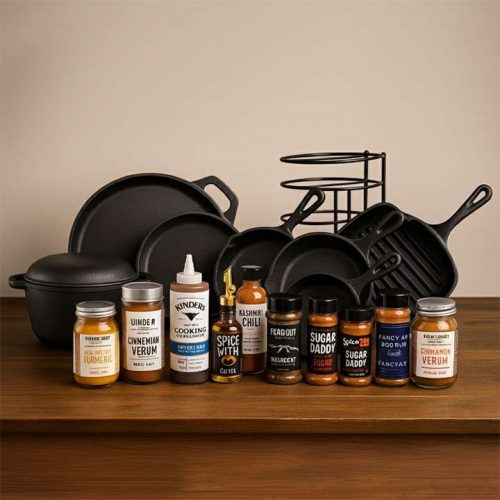
Cast iron deserves its own conversation. The Chef’s Essential 11-Piece Cast Iron Set offers legendary heat retention and even heating, packaged in a complete collection. Cast iron requires minimal maintenance proper seasoning and simple care but rewards you with decades of reliable performance. It transitions from stovetop to oven seamlessly, handles high heat, and actually improves with use.
Practically: ceramic nonstick for everyday cooking where easy cleanup matters, cast iron for searing steaks, making cornbread, or high-heat applications. Together, these materials cover every cooking technique you’ll encounter.
The Decluttering Method That Actually Works
Before investing in quality pieces, clear out what’s holding you back.
Empty your cabinets completely. Lay it all out and ask: “When did I last use this?” If a pan hasn’t touched your stove in six months, it’s clutter. That fondue set, the egg poacher, the warped pan you keep “meaning to replace” they’re taking up space that should hold tools you actually reach for.
Keep only what earns its place. A quality frying pan you use four times weekly deserves prime real estate. A specialized gadget you’ve used twice in two years doesn’t.
Once cleared, organize intentionally. Store most-used items within easy reach. Stack pans with pan protectors to prevent scratching. Keep lids organized so you’re not creating a clanging avalanche.
This physical decluttering creates mental clarity. When you can see what you have and access it quickly, cooking transforms from a frustrating treasure hunt into smooth workflow.
Building Your Kitchen Workflow
Confidence isn’t just about equipment it’s about creating systems. Professional kitchens have everything in its place, tools within arm’s reach, workflows that eliminate wasted motion.
Organize spatulas, wooden spoons, and tongs in a crock next to your stove. Keep most-used pans on the lowest shelf. Store lids vertically so you can grab the right one instantly.
Quality cookware makes workflow easier. Stay-cool handles mean you don’t need separate potholders. Tempered glass lids let you monitor food without releasing steam. These design considerations eliminate friction points that make cooking feel complicated.
Temperature control becomes intuitive when cookware heats evenly. You learn how your pans respond, developing muscle memory for perfect pancakes or restaurant-quality sears. This knowledge transfers between dishes, compounding your skills.

When to Upgrade and What to Prioritize
Strategic upgrades deliver the biggest confidence boost with manageable investment. Start with your most-used piece typically a frying pan. Replace that warped, scratched pan with a quality nonstick option that makes eggs slide off and vegetables caramelize instead of stick.
Next, address heat distribution problems. If your saucepan scorches rice or your stock pot has a hot spot that burns soup, that’s your second priority. Quality pans with proper aluminum cores eliminate these issues, making previously “difficult” recipes suddenly straightforward.
Focus on performance over quantity invest in fewer pieces that work exceptionally well rather than filling cabinets with mediocre options. Prioritizing quality based on what you actually cook always delivers better results.
The Confidence Multiplier Effect
When you combine decluttered space with quality cookware, cooking stops feeling like a chore you’re bad at and starts feeling like a skill you’re developing.
You attempt recipes you previously avoided because you trust your equipment. When that seared salmon comes out perfect, you don’t think “I got lucky” you think “I can do this.” That confidence builds on itself. You experiment more, invite friends over, meal prep instead of defaulting to takeout.
I watched this transformation with Emily. After decluttering and investing in proper cookware, she went from ordering delivery five nights weekly to cooking at home most nights. Not because she became a talented chef, but because cooking became easier and enjoyable. Six months later, she’s hosting dinner parties and sharing recipes.
That’s the real value removing the barriers that make cooking feel harder than it should be.
Frequently Asked Questions
What’s the difference between cheap nonstick and quality ceramic nonstick cookware?
Cheap nonstick coatings wear out quickly, often within months of regular use. They scratch easily, lose their nonstick properties, and can release concerning chemicals when overheated. Quality ceramic nonstick uses mineral-based coatings reinforced with materials like titanium for durability. These coatings maintain their performance for years with proper care, resist scratching from metal utensils, and don’t contain PFOA or PFOS. The investment difference is significant when you calculate how many times you’d need to replace cheap pans.
How do I know if I need to replace my current cookware?
Look for warping (pans that wobble on a flat surface), visible damage to nonstick surfaces (scratches, flaking, discoloration), uneven heating (hot spots that burn food while other areas undercook), and loose or damaged handles. If your cookware makes cooking harder instead of easier, or if you’re constantly fighting stuck food despite using proper technique, it’s time to upgrade. Quality cookware should last years without significant performance decline.
Is cast iron really worth the maintenance?
Cast iron maintenance is far simpler than reputation suggests. Modern pre-seasoned cast iron requires only washing with hot water, drying completely, and occasionally rubbing with a thin oil layer. That’s it. In exchange, you get cookware that lasts generations, heats incredibly evenly, transitions from stovetop to oven, and actually improves with use. For searing meat, making cornbread, or any high-heat cooking, cast iron performance justifies the minimal extra care.
Should I buy a complete set or individual pieces?
For starter kitchens, a thoughtfully curated set offers better value and ensures all pieces work together cohesively. Look for sets that include exactly the sizes most home cooks use regularly without unnecessary filler pieces. If you already have some quality cookware, buying individual pieces to fill gaps makes sense. Avoid massive 20-piece sets unless you have specific plans for every item they’re often designed to impress with quantity rather than deliver practical value.
How can I organize a small kitchen to maximize efficiency?
Use vertical space with pot racks or wall-mounted organizers. Store lids separately in a file-style organizer so you can grab the right one instantly. Keep your three most-used pans in the most accessible location and rotate seasonally if your cooking patterns change. Nest pans with protective layers between them to prevent scratching. Invest in drawer dividers for utensils so you’re not digging through a jumbled mess. The key is making retrieval and storage equally effortless so you’re not discouraged by disorganization.
Your Kitchen Transformation Starts Now
The path from cluttered confusion to confident cooking starts with honest assessment clearing out what doesn’t serve you, understanding what you need, and investing in quality where it matters.
You don’t need thirty pans. You need the right five to seven pieces that perform reliably. You don’t need every specialized gadget. You need cookware with excellent heat distribution, easy cleanup, and lasting durability.
Start with the core set that handles your everyday cooking. Organize your space so cooking feels fluid rather than frustrating. Give yourself permission to enjoy the process instead of pursuing perfection.
That cluttered kitchen making you want to order pizza again? It’s one afternoon of decluttering and one smart investment away from becoming the space where you finally learn to love cooking. The transformation isn’t about kitchen size or equipment expense it’s about removing barriers between you and the confidence that comes from creating something delicious with your own hands.
Your kitchen makeover begins the moment you decide cooking is worth making easier.