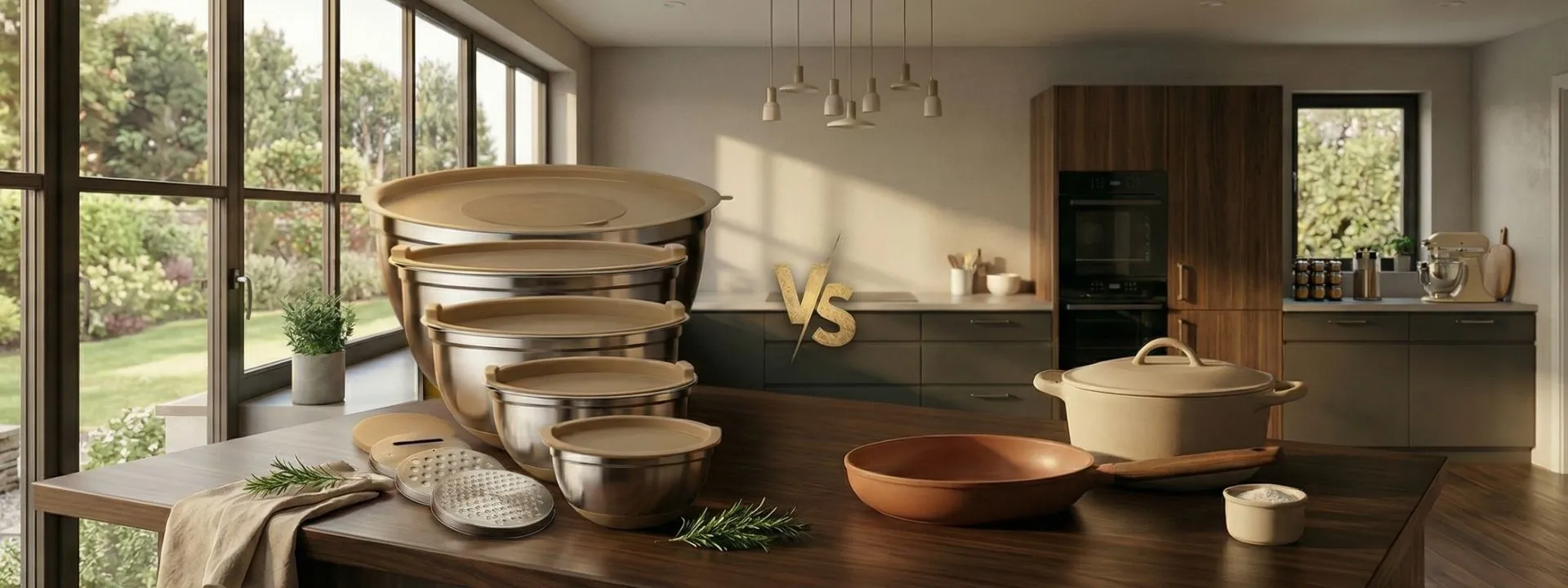
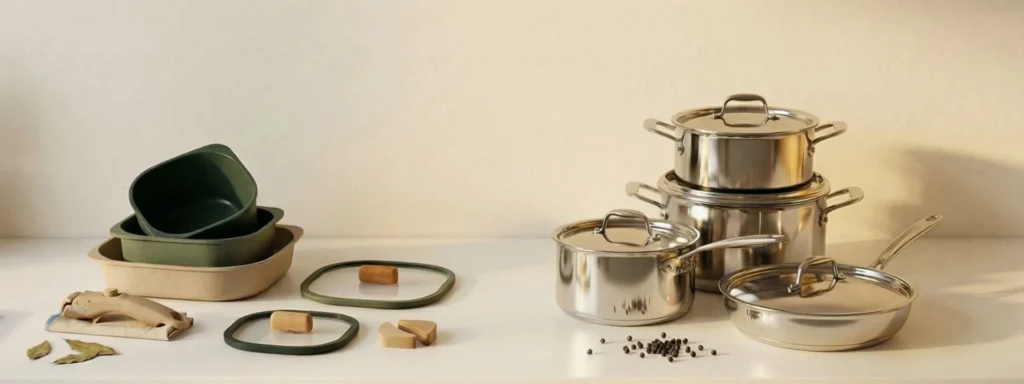
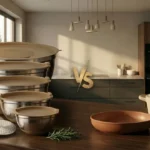
Today, referring to ceramic in the modern kitchen means indulging in the idea of comparing the ceramic coated vs stainless steel cookware. Most modern ceramic-coated cookware uses a silica-based coating applied over a metal base (often aluminum), usually via a sol-gel–type process. By using this technique, the pan gets a smooth nonstick surface that is typically free from PFOA and PTFE.
The advantage of the product lies in the smoothness and its nonstick quality. It’s a good option for people who want to cook with less oil. No eggs will be stuck to the pan, and delicate fish will stay whole. However, despite all its advantages, it is not able to adjust quickly to temperature changes. So, if you want to know, is ceramic cookware better than stainless steel, then you need to evaluate your preferences first, as your answer depends entirely on your cooking style.
Stainless Steel’s Strength
It’s no surprise that stainless steel is the ultimate king of any kitchen. There is a reason many chefs in high‑end kitchens rely on stainless steel rather than nonstick pans for their signature dishes. It isn’t because they have an emotional attachment to it, rather it is due to its extremely durable and non-reactive nature of steel, which can endure very high temperatures that would cause a ceramic coating to crumble.
However, when one compares stainless steel vs nonstick vs ceramic, stainless steel shines due to its unique capability of developing the “fond”, which is that caramelized and flavorful brown residue that forms at the base of the pan from seared meat. This is a key component of all great pan sauces, and it adds incredible flavor to any dish that is made in the pan. Stainless steel is basically that forever cookware. It will not chip or peel, and with proper care it can become an heirloom item. It just requires some skills to make it perform at its best.
Ceramic vs Stainless Steel Cookware Pros and Cons
When we compare and break down to look at the pros and cons, it is obvious that every material has its advantages and drawbacks.
Pros of Ceramic
- Ceramic coatings are generally considered a safer nonstick option and are typically free from PFOA and PTFE.
- Almost all its stains can be easily removed by wiping it with a wet sponge.
- They are available in various attractive colors to complement the kitchen decor.
Cons of Ceramic
- Even the best coating of ceramics becomes ineffective against sticking after 1 to 3 years.
- Very high heat can cause oil to burn and carbonize on the surface, which damages the nonstick performance of the ceramic coating over time.
- The surface could wear off with the application of metal tools and when stacked carelessly.
Pros of Stainless Steel
- Stainless steel is resistant to metal whisks, searing, and even baking.
- It has the ideal cooking surface for browning, deglazing, and making rich sauces.
- High‑quality stainless steel is non‑reactive, so you can cook acidic foods like tomato sauce without worrying about unwanted metallic flavors.
Cons of Stainless Steel
- Food will stick to the bottom of the pan if it hasn’t been properly heated and sufficient oil hasn’t been added.
- It needs regular scrubbing to keep its shiny appearance.
- It is usually heavier than ceramic, which can be tiring for some users.
The Heat Distribution Factor
One of the major differences discussed about the ceramic vs stainless steel cookware is its thermal conductivity. On one hand, as an element by itself, stainless steel does not conduct heat very well. That’s why quality steel pans usually have an aluminum or copper layer placed between two layers of steel. It makes the pan heat evenly and fast.
On the other hand, most ceramic-coated pans have an aluminum base, so they heat up evenly. Also, the ceramic coating itself acts more like an insulator, so the pan often takes a bit longer to heat, but the good thing about it is that the pan will maintain its temperature. In other words, it is suitable for slow cooking processes. It may not respond as quickly to sudden temperature changes, so it’s less ideal for very fast, high‑heat cooking where you need instant control.
Why You Need Both in Your Kitchen
In all honesty, the discussion about stainless steel vs nonstick vs ceramic should not be about going for one and discarding the other. The ideal kitchen incorporates both types. You can use your ceramic cookware for the gentle jobs such as making eggs, crepes, flaky fish, and other dishes that contain starchy substances. Ceramic gives you a stress‑free experience that makes morning prep much easier. On the other hand, you can use the stainless steel cookware for the heavy lifting, such as grilling your steak, roasting chicken, stir-frying vegetables, and making long-simmering sauces. This allows both kinds of cookware to have a longer shelf life, while providing the best flavor.
At Torobon, we believe that mastery in the kitchen lies in the ability to use your tools properly. Settling for an average set of cookware is not something we do at Torobon, because there are so many options available today. Invest wisely in what you can afford, be kind to your equipment, and keep in mind that the best cooking equipment for you is the one that motivates you to hit the kitchen and get creative. Dive into the exciting realm of premium materials and discover the right balance for yourself at Torobon!
In all honesty, the discussion about stainless steel vs nonstick vs ceramic should not be about going for one and discarding the other. The ideal kitchen incorporates both types. You can use your ceramic cookware for the gentle jobs such as making eggs, crepes, flaky fish, and other dishes that contain starchy substances. Ceramic gives you a stress‑free experience that makes morning prep much easier. On the other hand, you can use the stainless steel cookware for the heavy lifting, such as grilling your steak, roasting chicken, stir-frying vegetables, and making long-simmering sauces. This allows both kinds of cookware to have a longer shelf life, while providing the best flavor.
At Torobon, we believe that mastery in the kitchen lies in the ability to use your tools properly. Settling for an average set of cookware is not something we do at Torobon, because there are so many options available today. Invest wisely in what you can afford, be kind to your equipment, and keep in mind that the best cooking equipment for you is the one that motivates you to hit the kitchen and get creative. Dive into the exciting realm of premium materials and discover the right balance for yourself at Torobon!