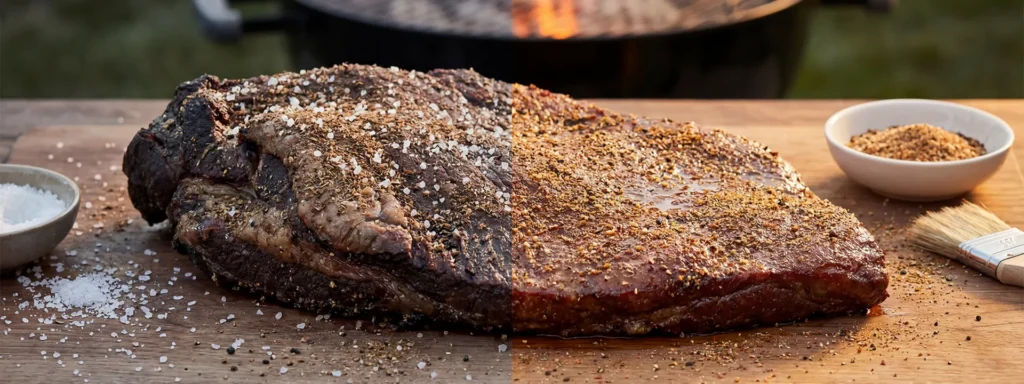
The most frequent mistake beginners make is relying on a rub that is too heavy on the salt. Many commercial bbq rubs list salt as the primary ingredient. If you apply this too thickly, the salt acts as a curing agent, drawing out essential moisture from the meat before it even hits the heat. This leaves the final result dry and tough rather than juicy and tender. This is particularly risky when preparing bbq rubs for brisket or bbq rubs for ribs, as these cuts cook for a long time. The salt concentration intensifies as the meat shrinks and the moisture evaporates. Always check the label—if salt is listed first, start with a light, even dusting rather than a heavy coat. Choosing blends that balance salt with spices, like the options in Torobon’s spices, seasonings & rubs, makes it easier to avoid over-salting while still building a flavorful bark.
2. Burning Sugar at High Temperatures
Sweet bbq rubs often contain brown sugar, turbinado sugar, or molasses. These ingredients are fantastic for creating a caramelized, sticky bark during long, low-heat smoking sessions. However, sugar burns quickly at high temperatures. If you use a sugar-heavy blend for bbq rubs for steak or quick-searing tasks, you will likely end up with a bitter, charred crust that tastes like burnt syrup rather than smoky goodness. Save your sugary blends for low-and-slow cooking. For high-heat grilling, opt for savory, herb-based, or mild bbq rubs that can withstand the direct flame without turning bitter. When shopping, look for more savory-forward options in Torobon’s BBQ and grilling seasonings for steaks and quick cooks, and reserve sweeter blends for ribs and pork shoulder.
3. Neglecting the Prep Work
For any rub to perform its job correctly, it needs to adhere properly to the surface of the meat. A common error is applying rub to cold, damp meat straight from the refrigerator. Always pat your meat completely dry with paper towels before seasoning. If the surface is wet, the rub will clump into a gummy paste and slide off as soon as the heat hits it. Furthermore, using a “binder” is a secret professional technique. A very thin layer of yellow mustard, olive oil, or even mayonnaise serves as glue, ensuring that your bbq rubs for chicken or bbq rubs for fish stay firmly attached. The binder doesn’t affect the final flavor; it simply keeps your seasoning in place. Once you start working with higher-quality blends such as Torobon’s gourmet BBQ rubs, proper prep ensures none of that flavor is wasted.
4. Ignoring the Protein Profile
One of the most important aspects of professional grilling is matching the rub to the ingredient. Using the same universal rub for everything ignores the nuance of the food.
- bbq rubs for chicken: These should focus on lighter, aromatic herbs like thyme, sage, or rosemary, often with a hint of citrus or onion powder to cut through the richness of the skin. A balanced all-purpose blend from Torobon’s seasoning range can be a great base.
- bbq rubs for brisket: Stick to the texas style bbq rubs philosophy. Focus on a heavy base of coarse cracked black pepper and kosher salt. Over-complicating this rub often distracts from the quality of the beef.
- bbq rubs for vegetables: Keep it simple. Vegetables have delicate natural flavors, so avoid heavy chili or sugar blends. A light dash of garlic powder, smoked paprika, and perhaps a touch of cumin is perfect for bbq rubs for vegetables.
- bbq rubs for fish: Fish requires a delicate touch. Use fine-grain spices rather than chunky ones, and avoid overly aggressive spicy bbq rubs that will overpower the mild sweetness of the fish. Building a small collection of different blends from Torobon’s spices, seasonings & rubs lets you pair the right rub with each protein instead of forcing one mix to do everything.
5. Improper Storage of Spices
Many home cooks store their bbq rubs in a cupboard directly above the grill or in a place that experiences high heat and humidity. Spices are volatile; they lose their potency, flavor, and essential oils when exposed to these conditions. High heat causes the spices to oxidize, and humidity causes them to clump together. If your rub is clumpy, it is a sign that it is no longer fresh. Always store your rubs in airtight containers in a cool, dark, and dry pantry. If you are mixing your own, only create small batches to ensure you are always using the freshest ingredients possible. Investing in fresher, small-batch blends from curated sources like Torobon also helps, since they prioritize quality and turnover over mass production.
6. Misjudging the Timing
Timing your seasoning is just as important as the heat level. For thicker cuts, applying a salt-heavy rub 45 to 60 minutes before cooking allows the salt to dissolve into the meat’s surface moisture, which actually helps with moisture retention and flavor penetration. However, applying a rub hours in advance to thin cuts, like steaks or pork chops, can start a curing process that makes the meat taste more like ham or deli meat than a freshly grilled steak. For delicate proteins, apply your rub immediately before hitting the grill. Many pitmasters and barbecue educators (you will find plenty of examples in resources like Serious Eats’ grilling and BBQ guides) emphasize adjusting rub timing based on cut thickness and salt level.
7. Fear of Customization and Balance
Many people rely strictly on store-bought blends, missing out on the joy of creating a signature flavor profile. You can balance smoky bbq rubs—which often feature heavy doses of paprika or chipotle—by cutting them with mild bbq rubs or even a little bit of granulated garlic to soften the edge. If you find a rub is too one-dimensional, add a pinch of mustard powder for tang or a bit of cayenne for heat. The goal is to reach a balance where the spice enhances the meat rather than hiding it. Remember to always taste a tiny sample of your rub before applying it to expensive cuts of meat; if it tastes unbalanced on its own, it will taste even more unbalanced once cooked.
Experimenting with different blends from Torobon’s gourmet spice and rub collection, and then tweaking them slightly to your taste, is a straightforward way to build your own “house” rub without starting from scratch.
Achieving perfect barbecue is about consistency and attention to detail. By managing your salt intake, selecting the right seasoning for the specific protein, and storing your ingredients properly, you remove the guesswork from your grilling sessions. Start by mastering one reliable blend, and then slowly branch out into more complex flavor combinations. Whether you prefer the bold kick of spicy bbq rubs or the gentle, savory comfort of a traditional blend, the secret is in the application. Take your time, pat that meat dry, and enjoy the process with the right techniques and the help of quality seasonings from Torobon, your backyard grill can deliver restaurant-level results.