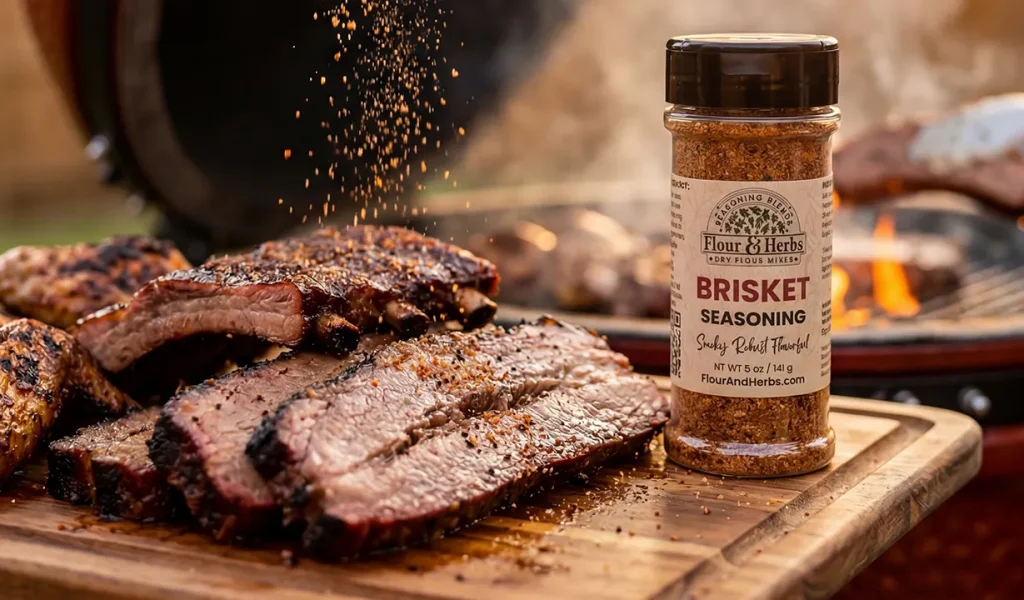
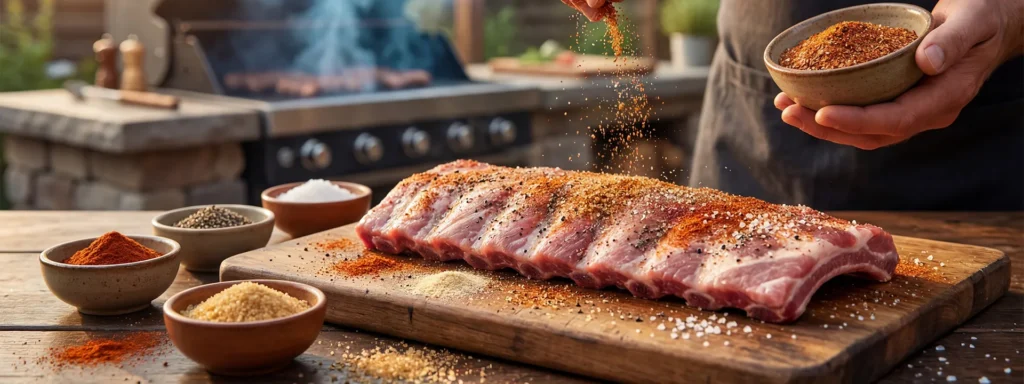
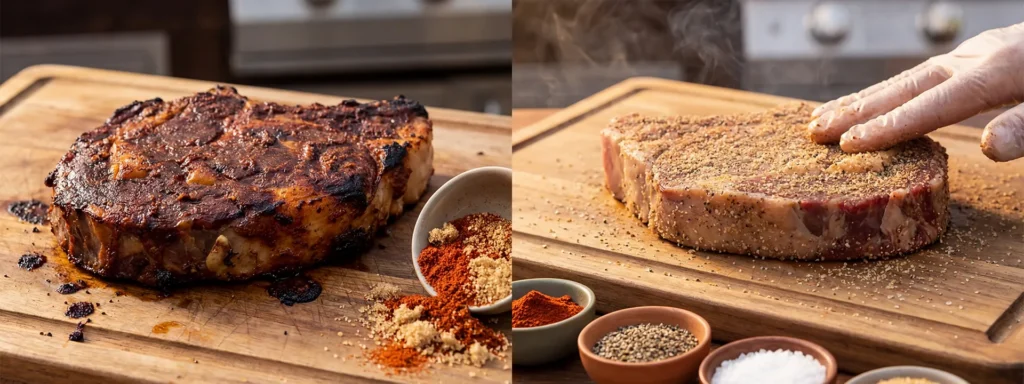
A BBQ rub is a mixture of herbs, spices, and sometimes salt or sugar applied before grilling. Unlike marinades, a dry BBQ rub contains no liquid and forms an aromatic crust during cooking, especially when grilling or smoking. If you want to dive deeper into how dry rubs compare to marinades, this guide explains the key differences and when to use each.
Typical ingredients of a dry rub:
- Paprika
- Garlic powder
- Black pepper
- Brown sugar
- Salt
How to Season with a BBQ Rub
BBQ rubs are among the simplest and most flavorful ways to make meat, fish, and even vegetables more scrumptious. Whether you’re looking for mild BBQ rubs or bold Texas‑style BBQ rubs, knowing how to use the rub right will take your cooking to the next level.
Here are some basics of seasoning with a BBQ rub, application tips, popular blends, and common mistakes.
How to apply BBQ rub for a crispy crust
Pat the meat dry. A little residual moisture is fine; too much will prevent the rub from sticking. Then, optionally, use a binder. A light film of oil or mustard improves adhesion; afterwards, massage the rub in generously. Work the spices in well, making sure to cover the meat thoroughly and evenly.
How Long to Let a Rub Rest
Let it sit. For more flavour, let it rest in the refrigerator for 30 minutes, or even overnight, before grilling.
Golden tip: Longer resting times work particularly well for brisket rubs, ribs, or chicken thighs, where deeper flavor really pays off.
Popular BBQ rub types
- Spicy dry rub: Ideal for wings, pork, and spice lovers.
- Sweet BBQ rubs & smoky BBQ rubs: Perfect for BBQ ribs and pulled pork.
- Salt‑free: Great for a low‑sodium approach, where you rely on herbs and spices more than salt.
- Cajun style: Strong, peppery, excellent with seafood.
- Texas‑style BBQ rubs: Heavy on black pepper and warm spices; ideal with beef, lamb, or hearty vegetables. You’ll find several Texas‑inspired options in Torobon’s BBQ rubs collection.
Using a lot of BBQ rub
We understand that the rubs can be tempting; however, applying a very thick layer of rub can backfire. Applying an excess of BBQ rubs for ribs or BBQ rubs for steak can burn at high heat and turn into a bitter, charred crust. Aim for a light, even layer to make sure the smoky BBQ rub enhances flavours instead of masking them.
Skipping the time to rest
For great BBQ, patience is the key ingredient. Even a short 30‑minute rest after applying BBQ rubs for brisket allows the moisture to draw the spices into the meat. This simple step helps your Texas‑style BBQ rubs penetrate deeper into the fibres for maximum flavour.
Applying sugar to high heat
In sweet BBQ rubs, sugar is a staple, but it has a low burning point. If you are using BBQ rubs for brisket or BBQ rubs for fish with a high sugar content, avoid searing over a very high flame. These types of BBQ rubs are best suited for slow cooking or indirect heat to avoid a burnt and acrid exterior.
Using excess salt on the meat
Many professional‑style BBQ rubs for brisket or steak already contain a significant amount of salt. If you pre‑salt your protein before applying these blends, the result can be unpleasantly salty. Always check the ingredients of your mild BBQ rubs before adding extra salt to your prep.
Aggressive rubbing
As the name suggests, the seasoning is supposed to be rubbed, but avoid aggressively grinding the spices into the meat. For delicate BBQ rubs for fish or BBQ rubs for vegetables, rough friction can tear the surface or cause clumping. Instead, use a gentle patting motion to press the spices down and create a good crust.
Storage & tools
- Store in airtight containers, protected from light and heat.
- Use shakers or spice grinders for even application.
- Label mixtures with the date and ingredients to monitor freshness.
Frequently Asked Questions About BBQ Rubs
Q: How much BBQ rub should I use?
A: Start with a light, even coating that fully covers the surface of the meat without forming a thick layer. You can always add more next time, but too much rub can burn and taste bitter.
Q: How long should BBQ rub stay on the meat before cooking?
A: For quick cooks like burgers or thin steaks, 15–30 minutes is enough. For larger cuts like brisket, ribs, or whole chicken, let the rub sit for at least 1–2 hours, or even overnight in the fridge for deeper flavor.
Q: What is the difference between a dry rub and a marinade?
A: A dry rub uses only dry ingredients like salt, sugar, and spices to form a flavorful crust, while a marinade includes liquids such as oil, vinegar, or yogurt to tenderise and flavor the meat.
Q: Can I use the same BBQ rub on vegetables or tofu?
A: Yes, most BBQ rubs work well on vegetables and tofu. Just use less salt and sugar, and focus on smoky or herbal flavors so you do not overpower the more delicate ingredients.
Q: How long do homemade BBQ rubs stay fresh?
A: If stored in an airtight container away from light and heat, most homemade BBQ rubs taste best within 6–12 months. After that, they are still safe but may lose aroma and potency.
Take Your BBQ Rub Game to the Next Level
If the right ingredients and techniques are used, mastering the art of grilling can become a flavorful journey. By understanding how to pair BBQ rubs for chicken, beef, or greens, and avoiding the common pitfalls of high heat and over‑salting, you ensure every cookout is a success.
So, experiment with different blends, find your signature BBQ rub, and transform every dish from good to unforgettable. Whether on the grill or the stovetop, a good rub makes all the difference. For more BBQ tips and tricks on setup, heat zones, and timing, you can also explore this practical guide to mastering outdoor cooking. When you’re ready to stock your pantry, discover Torobon’s full range of
BBQ rubs, sauces & condiments, and gourmet spices & seasonings to upgrade every grill session.